
Written by Alexandre Bridi
9 November 2026 · 5 min read
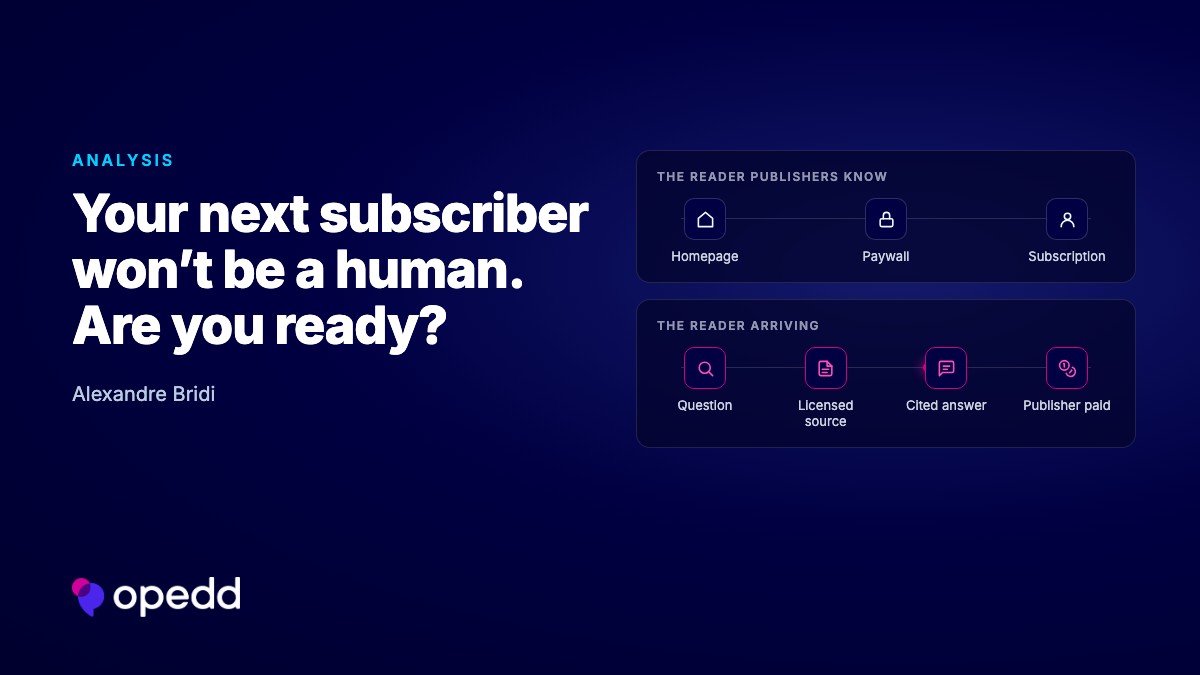
More readers now put their questions to an AI tool before they open a newsletter or a website. The largest publishers have built their own entrances into those tools. Any publication can now have the same, on its own terms, and be paid when it is used.
A partner at a consultancy has a client meeting in an hour. Her firm pays for a respected trade newsletter, but she does not open it. She asks the AI assistant her company introduced in the spring, and gets a tidy answer with sources. The newsletter is not among them. Its articles sit behind a paywall the assistant cannot pass, and its terms forbid the firm to paste them in. The publication has been paid, and ignored.
Scenes like this are becoming routine. When Substantive Research and Aiera surveyed 35 of the world's largest asset managers in July, 77% said they already ran AI tools across the whole firm. Asked what stopped them putting the research they buy into those tools, 69% pointed to licensing restrictions. The appetite exists, and so do the budgets. Permission does not.
The habit is not confined to finance. About half of American adults now use AI chatbots, against a third in 2024, according to the Pew Research Center. Every one of them is a reader who may never reach the publication's own pages.
The big houses moved first
The Economist has let corporate clients feed its journalism into their own AI systems since August 2025. Over the past few months Forrester, Reuters, IBISWorld and Crunchbase have launched direct links into tools such as Claude and Microsoft Copilot, and IDC is building one with Anthropic.
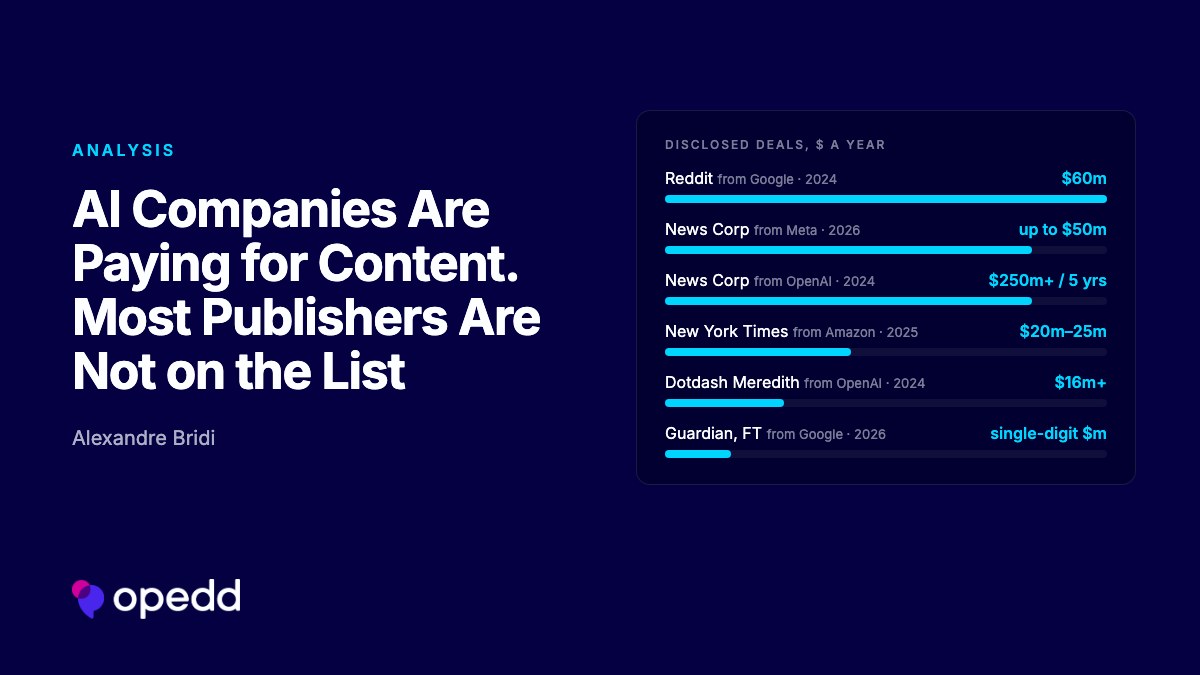
These companies have engineers to build such links, lawyers to draft the terms and salespeople to sell them. Most publications have none of the three. For them the choice has been between blocking AI altogether and being read by it for nothing.
Blocking does less than it seems. When BuzzStream examined 4m citations in AI answers this spring, 88% of the leading news sites that bar OpenAI's training crawler were cited anyway, as were 71% of those that block the bot ChatGPT uses to read pages live. A blocked publication is still read. It is simply not paid.
- Who pays
- Nobody
- For what
- Nothing
- Who sets the price
- None
- What the publisher learns
- Nothing
- Who pays
- An AI company
- For what
- Access to the whole output
- Who sets the price
- Negotiated, for the few that qualify
- What the publisher learns
- The size of the cheque
- Who pays
- Whoever runs the bot
- For what
- A page fetched
- Who sets the price
- The publisher, per fetch
- What the publisher learns
- Which pages were fetched
- Who pays
- Advertisers
- For what
- Ads beside AI answers
- Who sets the price
- The platform, as a revenue share
- What the publisher learns
- Its share of the takings
- Who pays
- The firms that read it, and their AI agents
- For what
- Questions answered with its work
- Who sets the price
- The publisher, firm by firm
- What the publisher learns
- Which firms use it, which pieces, on what terms
A door, not a wall
Most of these links rest on a shared standard, the Model Context Protocol, which Anthropic released in late 2024 and which the main AI tools now support. A connector is simply an address an AI tool can be pointed at. Once it is added, the tool can search the publication, quote it and cite it whenever a question calls for it.
The address is the easy part. The hard parts are commercial: deciding who may come in, letting some firms try before they buy, charging the rest, and keeping a record of who read what. That is where most publishers give up, and it is the part Opedd runs.
A connector at the publication's own address, such as yourname.mcp.opedd.com, built on the open standard the main AI tools already read. A firm adds it once; from then on its AI can search the publication whenever a question calls for it.
The wall is often a contract
Much of what keeps a publication out of its readers' AI is not technology but paperwork. Subscription terms written before these tools existed forbid clients to load the work into them, which is why licensing, rather than cost or quality, topped the asset managers' list of obstacles. A door turns that clause round. Instead of forbidding a use it cannot police, the publisher licenses it, prices it and sees it happen.
The terms stay the publisher's own, enforced in the ways described above. The writing remains its property, no arrangement is exclusive, AI training stays switched off unless the publisher turns it on, and existing subscribers notice nothing at all.
Who pays first
The likeliest first customers are not strangers. They are the firms whose staff already subscribe: they know the work, they pay for it, and they now want it where their people actually work. A free trial costs the publisher nothing and gives such a firm a reason to say yes. One independent publication on Opedd invited two of its client firms to trials within a week of its connector going live. After that, the price is the publisher's to set, firm by firm, at whatever level its work commands. It is income on top of subscriptions, not instead of them. The publisher keeps 80% of each sale, and nothing is charged until something sells.
Doors that software can pay at
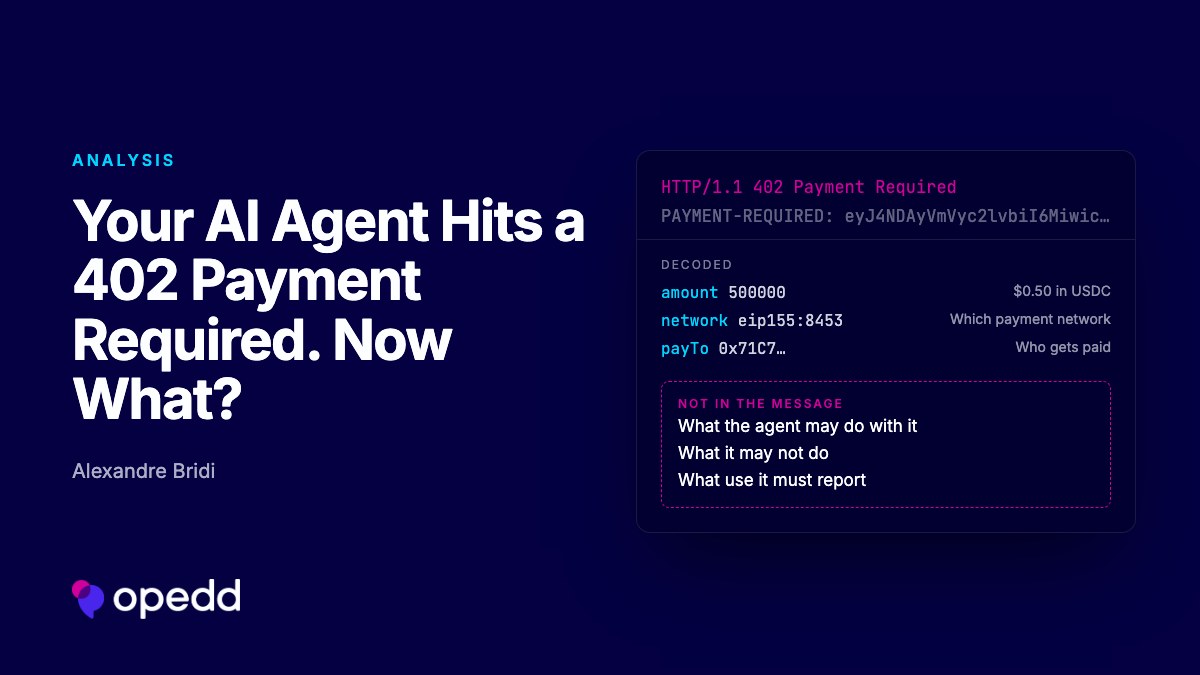
Not every caller will be a firm with a contract. Software is learning to buy for itself: Google has published an Agent Payments Protocol, and Stripe and OpenAI another, so that an AI agent can pay on its owner's behalf without a form or a sales call. Opedd accepts such payments. An agent with no account can put a question, be quoted a price, pay it by card and receive its answer, under the same licence, the same limit on how much it may quote and the same credit to the publication. The publications whose work answers it are paid. We looked at what happens when an agent meets such a price in an earlier piece.
Search taught publishers to compete for the click. Answers reward something else: being a source an AI tool is allowed to quote. That permission is now the publisher's to grant, and to price.
Getting started
A publication on Substack, Beehiiv or Ghost connects in a few steps. Others send their articles through Opedd's API. The connector follows within minutes, and the publisher can add it to its own Claude or ChatGPT that afternoon to see how its work is answered.
Any publication can connect to Opedd today, free until it earns. If you would rather walk through it first, book a call with us.