
Written by Alexandre Bridi
11 October 2026 · 4 min read
Two years ago the question was whether AI companies would pay for what they read. That has been settled. OpenAI agreed to pay News Corp more than $250m over five years. Amazon pays The New York Times $20m–25m a year. In March Meta agreed to pay News Corp up to $50m a year for at least three years. Google has brought more than 200 publications into a paid pilot; the Guardian and the Financial Times are reported to earn single-digit millions a year from it.
Look at who is being paid, though, and the pattern is plain. The money goes to publishers big enough to send lawyers: national newspapers, magazine groups and Reddit. The specialist publications that AI research tools lean on hardest, the analyst newsletters, trade journals and independent experts, are largely absent.
Why the money is moving
The first reason is traffic. For two decades publishers gave search engines their articles in exchange for readers. That exchange is breaking down. Chartbeat, which measures traffic for news sites, found that Google Search referrals to its publishers fell by 40.2% between July 2025 and July 2026, after a 21.9% fall the year before. Search now supplies 5% of their pageviews, down from 9% two years ago. AI assistants have not made up the difference.
When an answer replaces the click, a licence fee is one of the few ways left for a publisher to be paid for what an AI system takes.
The second reason is the courts. In July a judge approved Anthropic's $1.5bn settlement with authors, about $3,000 for each of some 500,000 books. The case turned on pirated copies; an earlier ruling had found that training on lawfully bought books was fair use. On 8 October USA Today Co and its affiliated papers sued OpenAI for more than $250m over articles from 19 titles. Neither case says what a licence should cost. Both put a price on doing without one.
From training to answers
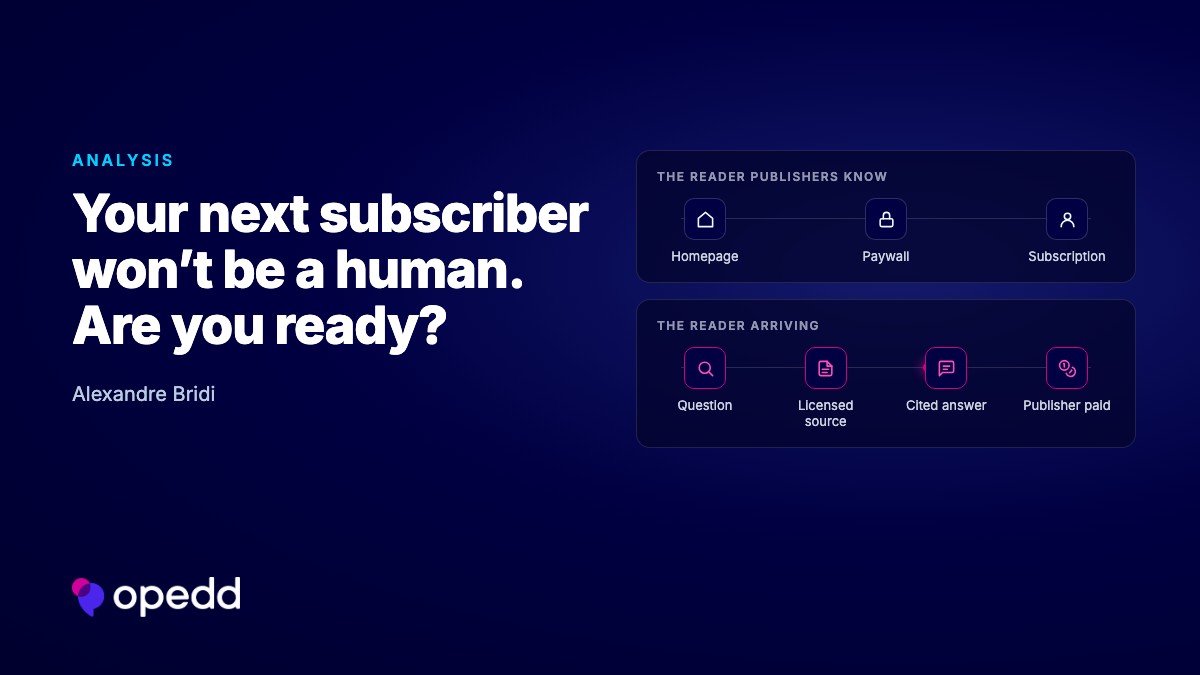
The early deals paid for training data: a one-off transfer of a back catalogue, after which the model had learned what it needed. The newer ones pay for something different. Meta's agreement with News Corp is about answering news questions in Meta AI. Amazon's lets Alexa give summaries and excerpts from The Times. Google's pilot covers training but also grounding, the practice of fetching articles at the moment a question is asked.
The shift matters because it changes what is being sold. A training licence buys a pile of text once. An answer needs the right article at the right moment, again and again, which makes current, specialist reporting worth more than its word count suggests. Yet almost every disclosed deal still pays a fixed sum, whatever the AI product actually uses.
The long tail
A bespoke deal takes months of negotiation on both sides. That is worth it for News Corp. It is not worth it for a two-person newsletter on Gulf shipping or chip supply chains, even when that newsletter is precisely what a research tool needs to answer the question in front of it.
AI companies face the mirror image of the problem. A tool built for analysts needs depth in hundreds of narrow fields. Negotiating with hundreds of small publishers, one contract at a time, is impractical, so most do not try. They use what is freely available, or go without.
Large publishers have their own dilemma. Describing Google's pilot, one industry figure told Press Gazette: "If your competitor has a deal and you are opting out, they get the small amount of traffic and the cash." Small publishers do not even get to choose. Nobody asks them.
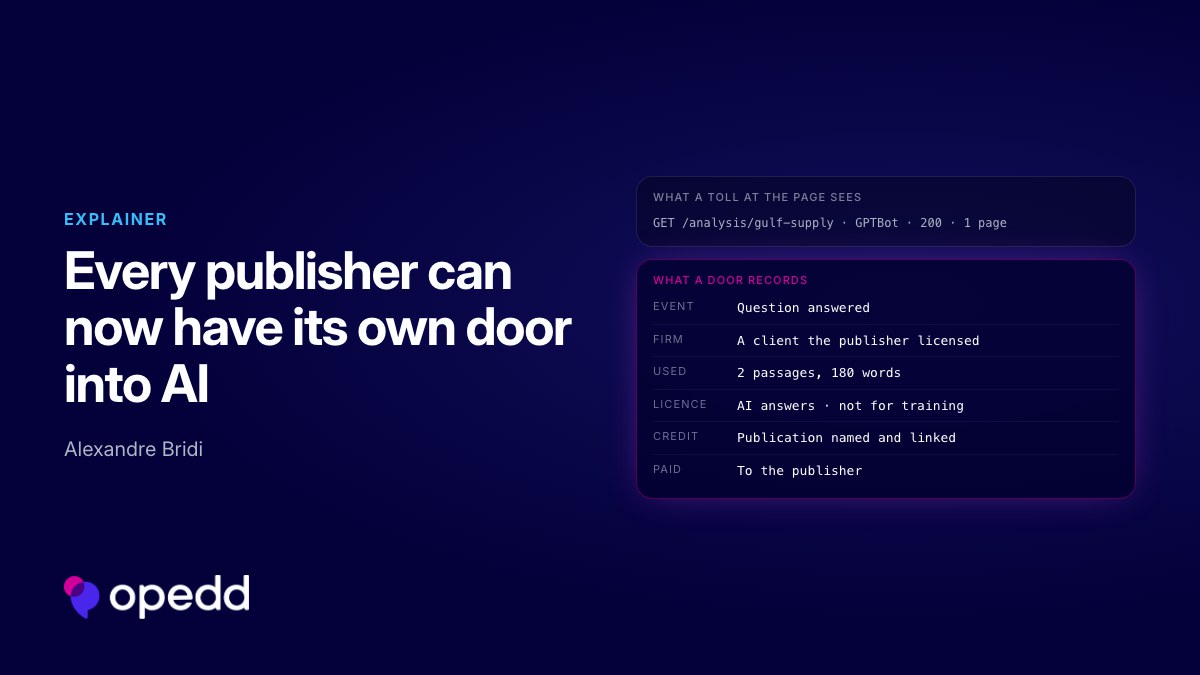
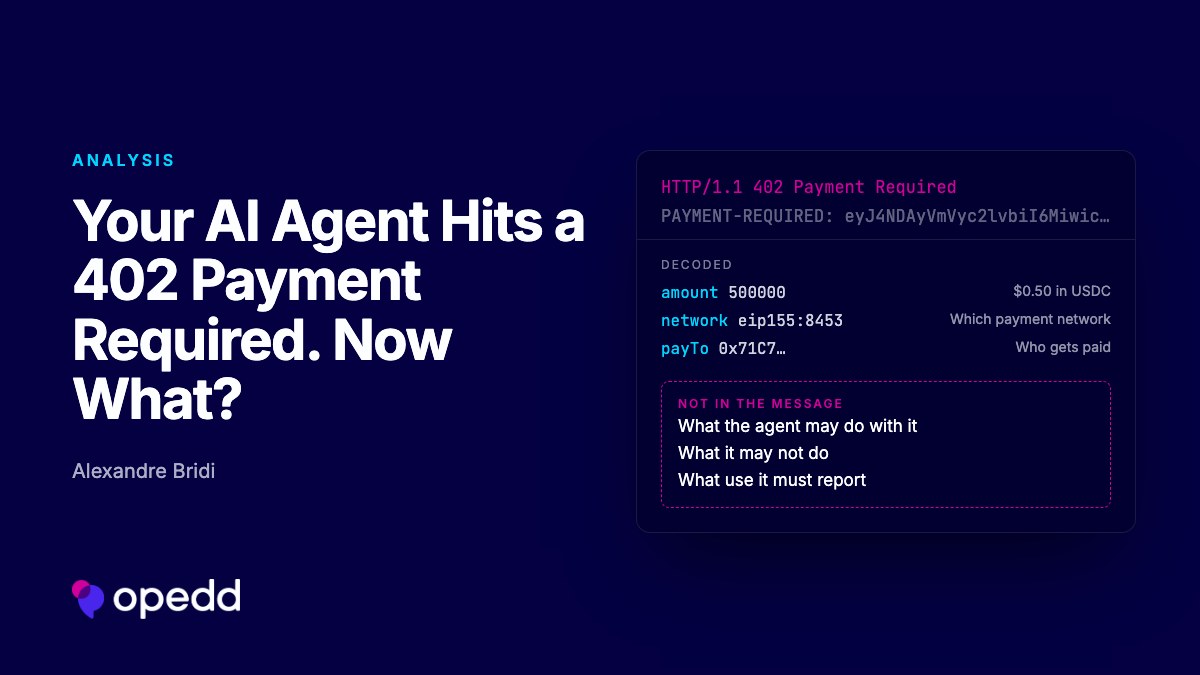
Closing that gap needs three things the bespoke deals do not provide: terms a small publisher can set without a lawyer, a way for an AI company to license from many publishers under one agreement, and records of use, so that payment can follow what is actually used rather than a guess agreed in advance.
That is the gap Opedd was built for. Publishers set terms for each kind of use; AI companies license through one agreement and one API; every use is tracked and paid.
The market has shown that it will pay for content. What it has not yet shown is that it will pay anyone other than the biggest names.